Dad or Daddy 3D Bow Tie Card SVG Review
First Impressions: Translating Paper Craft Logic to Thread
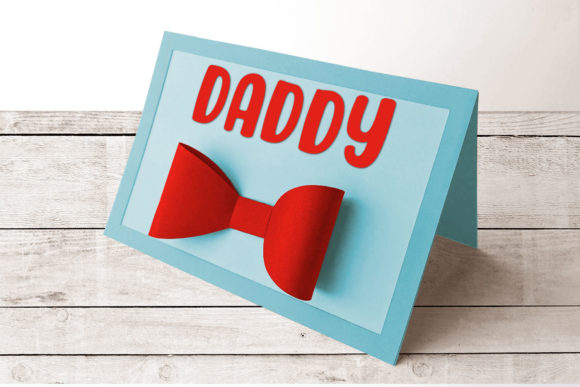
When I first opened the Dad or Daddy 3D Bow Tie Card SVG, my immediate reaction was one of cautious optimism. As a designer who frequently bridges the gap between digital cutting files and needlework, I look for structural integrity before aesthetics. This file is categorized under Shapes and marketed as a 3D SVG, originally intended for paper assembly in 4x6 or 5x7 sizes. However, for those of us in the embroidery project space, this presents a unique opportunity and a specific set of challenges. The visual personality is undeniably charming; it evokes a classic, dapper nostalgia that fits perfectly with Father’s Day merchandise or boutique baby apparel.
The layout is clean, which is a massive relief. Many novelty designs suffer from cluttered vectors that turn into thread nests when digitized. Here, the distinct separation between the bow tie shape and the typography suggests that this could translate beautifully into an applique design or a mixed-media piece. The mood is celebratory yet refined, avoiding the cartoonish vibe that often plagues dad-themed goods. For a handmade product seller, this sophistication matters. It signals to the buyer that the item was curated with taste, not just generated en masse. My initial assessment is that while this is a paper craft file at its core, its geometric clarity makes it a strong candidate for adaptation into custom apparel and keepsakes, provided you respect the translation process from vector to stitch.
Real-World Application: The Custom Sweatshirt Test
To truly evaluate the viability of the Dad or Daddy 3D Bow Tie Card SVG for commercial use, I mentally prototyped it for a high-demand item in my shop: a heavyweight cotton sweatshirt for new fathers. In this scenario, the design serves as a centerpiece chest placement. Because the original file includes assembly instructions for a paper bow tie, the lines are designed to interlock. In embroidery, we can leverage this by using a satin stitch border to define the bow tie edges against the fabric, creating a faux-3D effect through texture rather than actual folding.
For this sweatshirt embroidery application, I envision the bow tie executed as a layered applique. You would stitch a running stitch guide, place your contrasting fabric, and secure it with a tight satin border. The "Dad" or "Daddy" text, depending on your customer's preference, should be digitized in a bold, readable font that complements the bow tie’s weight. This combination creates a personalized gift that feels substantial. Customers react positively to tactile elements; when they run their hand over the raised satin stitch of the bow tie, the perceived value of the garment increases significantly. This isn't just ink on fabric; it is a constructed element. For Etsy sellers and small shop owners, this distinction justifies a higher price point and encourages repeat business for matching sibling outfits or holiday embroidery sets.
Navigating Fabric Constraints and Technical Limits
While the design is versatile, the Dad or Daddy 3D Bow Tie Card SVG requires careful consideration regarding substrate selection. Because this originates as a 3D paper concept, the internal details may be intricate. If you attempt this on a textured terry cloth towel or a highly ribbed knit, those fine inner lines of the bow tie will get lost. I strongly advise against using this on plush fabrics unless you simplify the design significantly. For baby embroidery on onesies or stretchy knits, the density becomes a critical factor. A dense satin stitch covering a large area on thin jersey knit will cause puckering and distortion, ruining the professional finish.
You must also be mindful of hoop size limitations. The original card finishes at 4x6 or 5x7 inches. If you are stitching this on a cap or a small pocket, you cannot simply shrink the design without losing clarity. Tiny lettering inside a scaled-down bow tie will become illegible thread blobs. Furthermore, dark fabrics present a contrast challenge. If the bow tie is meant to be black or navy, ensure you have adequate contrast against the garment color, or use a light outline stitch to separate the shapes. For tote bag design work on canvas, this file is generally safer due to the stable weave, but always verify that the stitch density isn't so high that it perforates the fabric like a postage stamp. Always check the specific licensing of your digital embroidery file adaptation to ensure you are cleared for commercial embroidery sales, as modifying a paper SVG for needlework occupies a gray area in some standard licenses.
Elevating Brand Value Through Thoughtful Execution
Using the Dad or Daddy 3D Bow Tie Card SVG effectively is about more than just successful stitching; it is about brand consistency and customer trust. When a client orders a custom apparel piece featuring this design, they are looking for a sentiment wrapped in quality. If the bow tie looks flat or the text alignment is off, it undermines the emotional impact. Conversely, when the 3D aspect is interpreted correctly through thread layering and precise registration, it enhances your reputation as a skilled maker. This design asset has the potential to become a signature item in your craft business portfolio because it balances masculine aesthetics with handmade warmth.
From a marketing perspective, this design photographs exceptionally well. The dimensional nature of the bow tie catches light differently than flat prints, making your printable mockup or product photography pop in social media feeds. For Etsy seller listings, highlighting the "3D" texture in your description manages buyer expectations and showcases craftsmanship. It transforms a simple graphic into a premium finished product. Whether used for a wedding gift for the father of the bride or a casual dad hat, the design carries a versatility that supports various product lines. Just remember that visual appeal relies entirely on execution; a poorly stabilized version of this file will look amateurish, while a well-executed version looks like high-end boutique merchandise.
Essential Designer Notes Before You Stitch
Before you load the Dad or Daddy 3D Bow Tie Card SVG into your machine or digitizing software, adhere to these practical protocols to ensure success:
- Test on Scrap Fabric First: Never run this design directly on a final product without a test stitch-out. The transition from paper vector to embroidery requires verifying that all paths connect logically.
- Verify Licensing and Compatibility: Since this is sold as a 3D SVG for cards, confirm explicitly that you have the rights to adapt it for embroidery. Do not assume cross-medium usage is permitted.
- Check Thread Color Contrast: Review your palette against both light and dark backgrounds. The bow tie needs definition; consider using a variegated thread to enhance the 3D illusion.
- Assess Stabilizer Needs: For stretchy fabrics or towels, use appropriate cut-away or water-soluble stabilizers to prevent the detailed bow tie shape from distorting during the satin stitch phase.
- Inspect Small Details: Zoom in on the digital file. If any part of the bow tie is thinner than 2mm, it may need to be widened or converted to a running stitch to prevent needle breaks or fabric tears.
- Create Black and White Mockups: Before selling, test the design in grayscale. If the bow tie disappears without color, your design relies too heavily on hue rather than value and structure.
- Confirm Hoop Size Requirements: Ensure your machine can handle the 4x6 or 5x7 dimensions natively. Resizing complex 3D-style graphics often requires re-digitizing, not just scaling.
By treating the Dad or Daddy 3D Bow Tie Card SVG with the technical respect it demands, you transform a simple digital shape into a profitable, professional embroidery project. The key lies in honoring the design's original intent while adapting its physics for the reality of thread and fabric.